

Farming like a Bodhisattva
biodynamics and the future of the earth


When we think about farming, what comes to mind? Perhaps it’s a delicious meal. Or maybe it’s a shining tomato out in the field. Perhaps it’s someone working. If you’re reading this, the picture of such a farm is probably a balanced model in which pollinators thrive, more wildlife is welcome, and diverse plants and flowers grow everywhere.
Masanobu Fukuoka served for many of us as a sort of “gateway drug” into agriculture, or at least he did for me. One Straw Revolution inspired me to try farming, though fifteen years later, I have to report that farming is much more work than that little book might lead you to believe! Working with Nature is still working. It doesn’t happen automatically, but it is nonetheless good work.
In another book, An Introduction to Natural Farming, Fukuoka writes about three modes of agriculture:
Conventional farming
Hinayana farming, and
Mahayana farming1
While these are Buddhist terms, you don’t have to be Buddhist to understand what they mean. One could easily rephrase this as:
Me, myself, and I,
A few of us, or
All of us.
Which are we working for? As a rule, purely extractive agriculture is the problem for our climate, not agriculture itself. Hinayana farming is organic farming: it’s undoubtedly a lot better than using biocides to kill everything, but it doesn’t necessarily regenerate soil or dedicate resources to wildlife beyond its own business model.
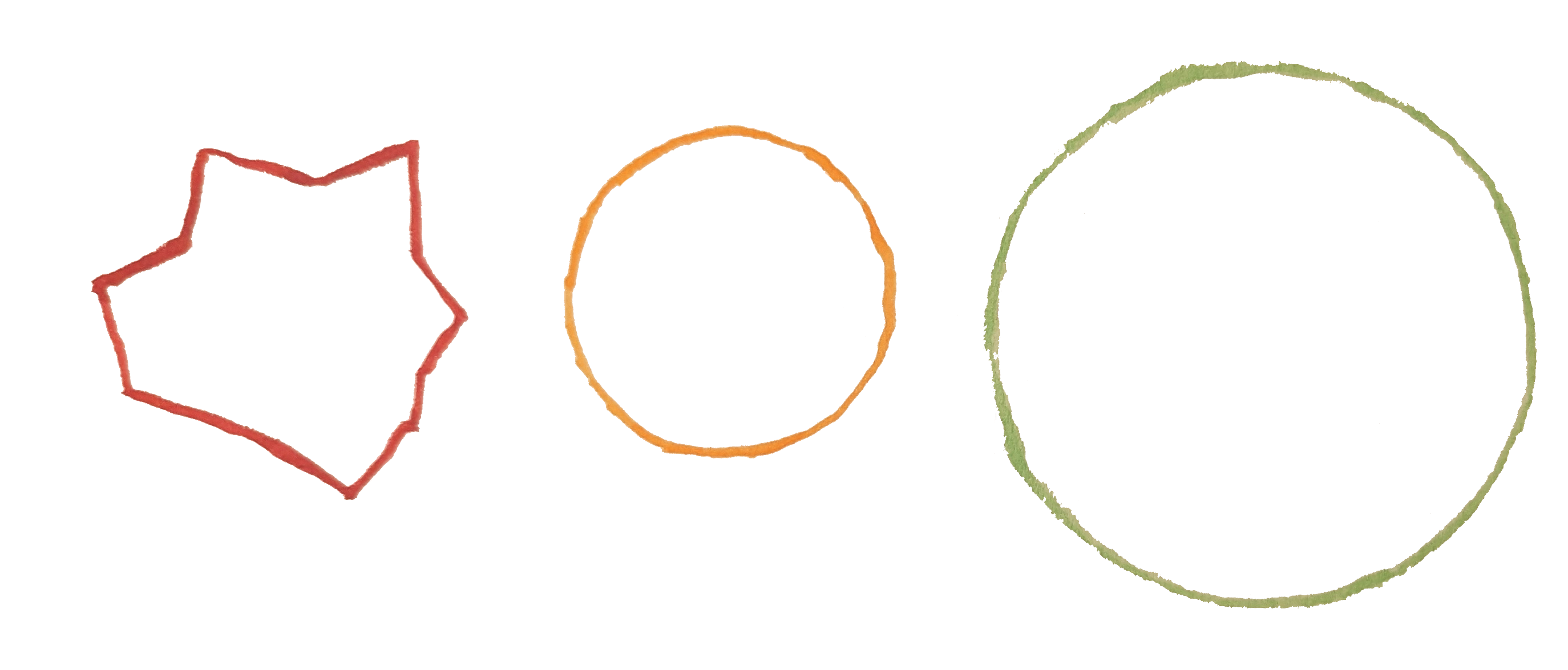
Conventional Farming
Conventional farming is somewhat irregular, an imposition of a “system” that invariably does not conform to the ecosystem but nevertheless outperforms what a small farm might otherwise expect to see. One could say, more simply, that conventional farming often does not dance with the environment but tends to trample it. Nature is often an afterthought: utility is seen as most important. And, as Steiner himself says, all farming — even biodynamic farming — is “exploitative”: we take from Nature when we farm, regardless of what method it is. It is this taking that should always motivate gratitude and return-gifts to Nature. In older times people spoke of gods that needed to be appeased — or “the good folk” (fairies) who would take revenge if we did not live in balance. The question is whether what we take is too much or not. Even a plant, Steiner remarks, is mildly “parasitic,” which I interpret to mean that at first every young organism must consume energy before it can offer anything back.
The conventional approach to farming helps many because it is truly industrious and productive, but it is irregular and generates enormous economic disparities and considerable unintended environmental damage. The “externalities” (karma) of conventional farming we see as erosion, underpaid laborers, pollution, and climate change.
Hinayana Farming
The second approach to farming may help fewer, but it helps those few more holistically and with minimal negative effects: those within the circle benefit from health and well-being. Imagine someone who grows all their own food, stores preserved goods in the root cellar, lives off the grid, minimizes their carbon footprint, but does so in total isolation. This solitary hermit-like figure is not the biodynamic goal, because this model expects everyone else to do the same. If everyone did this, yes, it would make for a balanced world — but most people aren’t going to do that. It is not enough for me to have a neutral carbon footprint! That kind of thinking still does not compensate for other real excesses. This is where biodynamics and Mahayana agriculture come into the picture.
Mahayana Farming
The third approach expands the circle beyond the farm’s physical limits, including others—even beings we may not particularly like. Biodynamics belongs to the third path because what we produce is meant to heal the Earth, not just our own small patch of land.
The idea of the “farm organism” is implicit in Hinayana and Mahayana approaches, but in the biodynamic Demeter standard, farmland must be dedicated to support wildlife. This is a radical approach to farming, and we see noble moves towards this with buffer strips and riparian zone restoration, but it is the biodynamic Demeter standard that leads the way in this. The “circle” of a biodynamic farm is bigger than a conventional farm, seeking to restore more than what is visible, and it is wider than any garden that fails to have dedicated wildlife habitat areas. Of course, we cannot forget the biodynamic preparations, which restore more than what any of these approaches even consider. Conventional farming often adds no compost or organic matter back to the soil, and Hinayana farming certainly adds compost, but does not bring in the planetary powers of the biodynamic preparations, which are the concentrated formative forces of creation itself.
In contrast to much conventional farming, an isolated but sustainable garden, fending exclusively for itself, “saves itself” — which is the ideal of the arhat, an obsolete Buddhist notion of escaping collective human karma. But a farm that cultivates wild spaces, tending them and improving them beyond its limits for the sake of society, that is the ideal of the bodhisattva, who sees over the horizon to eternity, but chooses to return out of loving service for others, until the last blade of grass is redeemed. Biodynamics, properly implemented, includes an intrinsically social dynamic that does not leave individuals in silos. A separatist mentality does not belong to our time.
While people might claim to embrace a so-called “holistic” approach to agriculture, there is no guarantee they apply the same principles to their social lives. An “organic” life is not enough because our sins of omission are greater than the positive offenses we inflict. It is not enough to avoid poison; one must seek true nourishment.
The enlightenment of the arhat is an illusion: choosing to separate oneself from humanity has an enormously negative karmic weight. How can one really separate oneself if there is no self (annatā)? Biodynamics says yes to a sustainably holistic approach, and only suggests that our circle is often far too small.
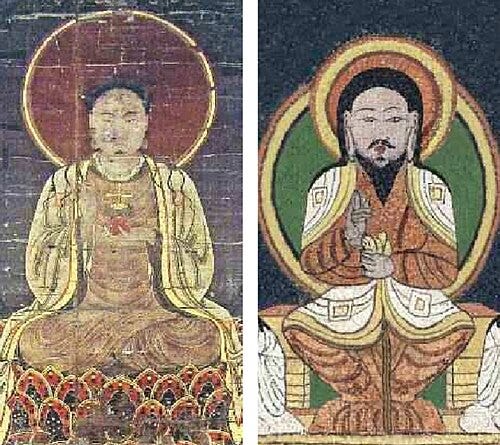
This is where Biodynamics links up with Steiner’s esoteric Christianity. For him, the foundation of Christianity is the eightfold Buddhist path.2 One might really say that you cannot be a good Christian unless you are first a decent Buddhist. The Bodhisattva is an almost-Buddha who sees over the horizon of eternity, and chooses to return to work for the liberation of all beings, even if it means rejoining the “wheel of suffering.” Here, we gain a glimpse of how the Christic impulse arises from the Buddhist impulse.
One does not need to be a Christian or a Buddhist to recognize these patterns and see the symbolic significance of living this way. If enough were to become like this, weeping with those who weep, mourning with those who mourn, and carrying each other’s burdens selflessly — that is a truly scalable model for human society, one in which graciousness is fully embodied. Plus, it does not require everyone to be this way, but rather “like sympathetic people in human society, who have a favourable influence by their mere presence,” all of society is considerably benefited by the existence of biodynamic farms, whether or not they appreciate it.
The universe is unnecessary, and thus gratuitous; as such, it demands a perpetual return-gift of graciousness in all things. Since we cannot do anything meritorious without first existing, existence itself is a gift that only remains a living gift if it is given away for others.3
What we find in the image of Jesus Christ is the picture of someone who gives away his own peace for the sake of others. This is impossible unless one really believes that others are one’s true self. This is only possible if one realizes that I am not myself, nor am I even my own sense of pleasure or displeasure. One cannot “Love one’s neighbor as oneself” without first passing through this portal. Having done so, though, one realizes that when Christ says, “My peace I give you, I give you my peace,” he is not kidding. He “who, though he was in the form of God, did not count equality with God a thing to be grasped.”4 This is to say: yes, freedom is wonderful to attain, but freedom is only freedom when it is sacrificed in loving service for others. Here we find the bodhisattva path opening up into the biodynamic path of agriculture.
You can see here why Hugh Courtney would say, “Biodynamics is not an intellectual path, it is a path of the WILL.” Which is to say, biodynamics is a path of goodwill, not merely thinking abstractly about things: doing good for the sake of others.
As St. Catherine of Siena said, “All the way to heaven is heaven.” It is not that giving away our own sense of private peace means increased turmoil, but instead it means a supernal joy in the midst of struggling to work for the good of others — not a manmade peace, but rather a peace that passeth all understanding even in the midst of difficulty.
This is the task of biodynamics: to return our work continuously for the sake of others until the last blade of grass is redeemed.
If these terms seem difficult, one might consider Ananda Coomaraswamy’s parallel from Buddha and the Gospel of Buddhism: Mahayana is Catholic Buddhism, Hinayana is Protestant Buddhism. One might consider conventional to be purely Secular.
If anyone wonders, we should remember that the Buddha is a canonized saint in both Catholicism and Orthodoxy: https://en.wikipedia.org/wiki/Barlaam_and_Josaphat
As a proverb says, “Sufism is all courtesy.”
Phillippians 2:6
Loved this post💝
Fantastic my friend. Thanks for connecting the Eastern philosophy and ancient practices of farming ..