

Biodynamics and the Internalized Solar System
Internalizing the cosmos


“It is not words only that are emblematic; it is things which are emblematic. Every natural fact is a symbol of some spiritual fact. Every appearance in nature corresponds to some state of the mind, and that state of the mind can only be described by presenting that natural appearance as its picture.”1 - Ralph Waldo Emerson
(part 5 of 5)
Read Part 1 here. Read Part 2 here. Read Part 3 here. Read Part 4 here.
If we take any common fruit, such as a plum, the pit is hard and often unpalatable — but the seed we don’t eat contains the power for a plant to maintain itself, grow, and reproduce. We aren’t after the bitter pit, but rather we want to consume the sweet flesh of the fruit, even though the fruit itself is “useless” to the plant for its own immediate purposes in a given season, it is the aspect animals and human beings prize for its nutritive quality.
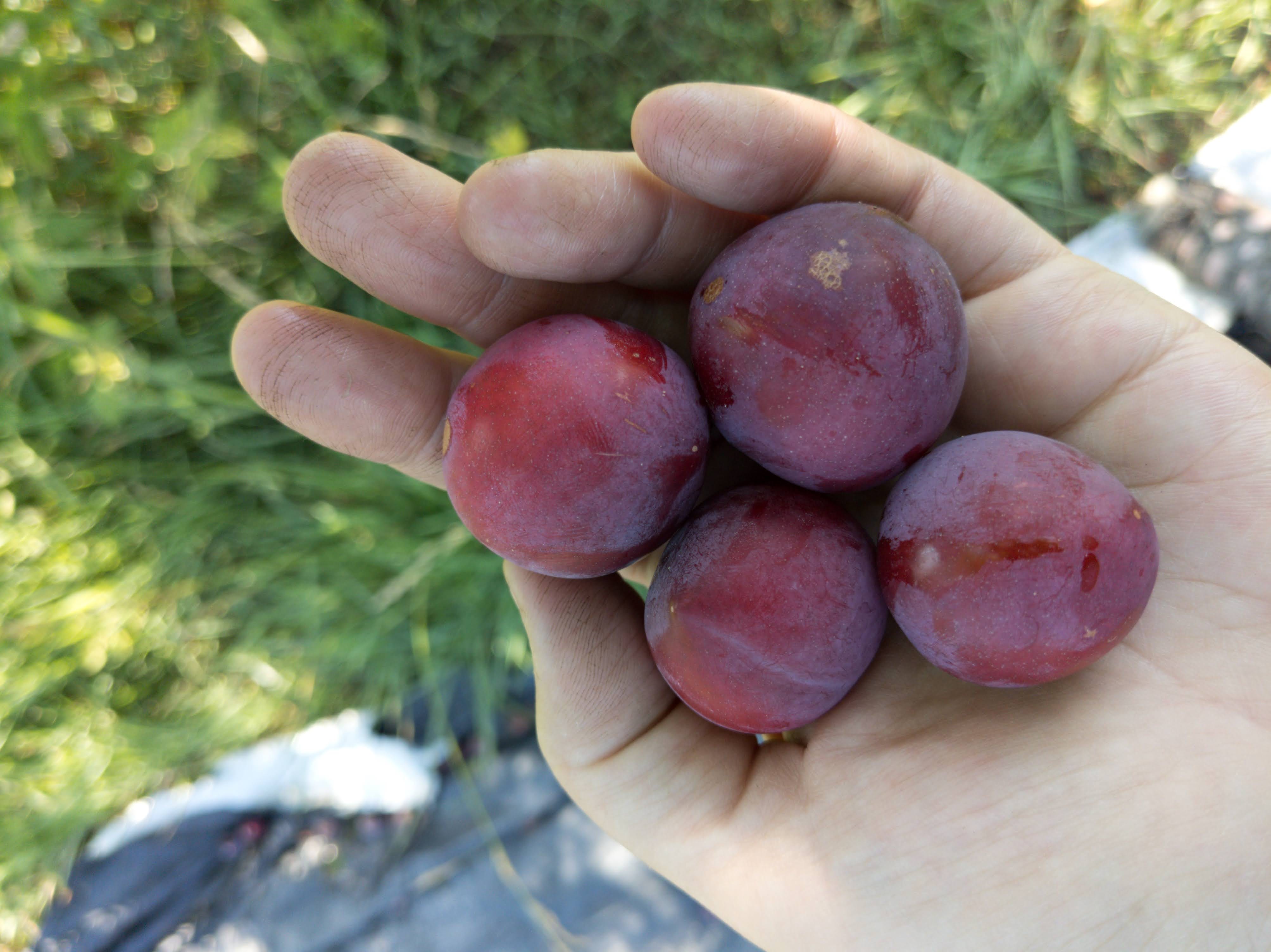
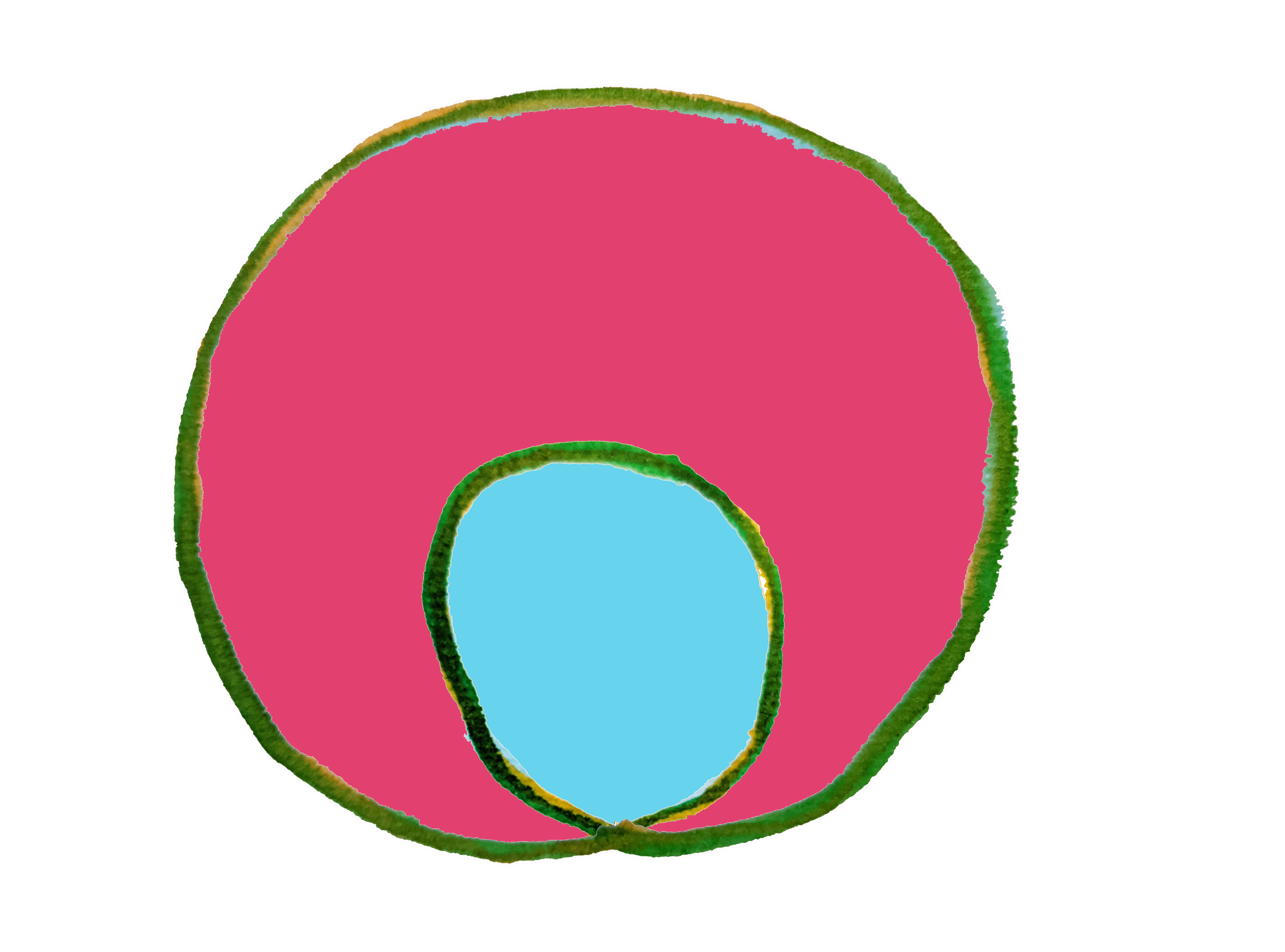
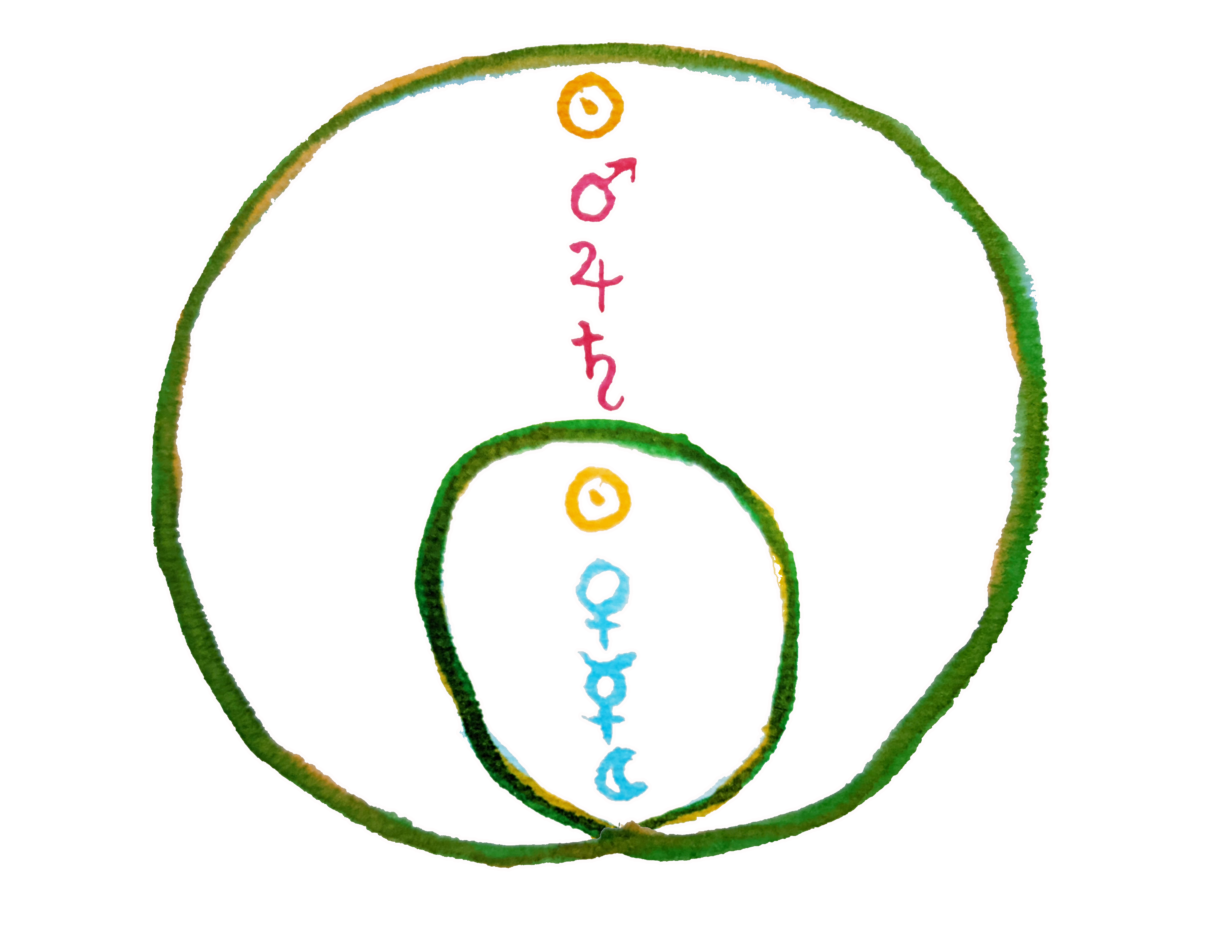
In Steiner’s own words, “Take for example the flesh of fruit—an apple or a plum—which we can break off and eat; all this is due to the workings from the distant planets.”2 But it’s important that these are not claims exclusive to plums but universal dynamics at work in any sweetening fruit. I am eating “Saturn” and “Jupiter” when I am eating any sweet fruit. We see the dynamics of Saturn in the differentiation of inner warmth, much as we see the dynamics of Jupiter in the swollen inner atmosphere. Hidden below the green surface of leaves is the partner of Venus: Mars, who is only exposed when she retreats back into the earth in autumn, and we see colors transform into all sorts of rusty hues.
The idea that we are completely abstracting these processes from one another, or that in a plum we are only eating “Saturn” forces, is an absurdity. The planetary processes, even the planetary spheres, are all around us and within us — not in silos but constantly interpenetrating. The sphere of the Earth, for example, is always “within” the sphere of the Moon! One should imagine nuanced layers of watercolors comingling rather than harsh lines, because in the spiritual world, nothing is nearly so separate as they seem externally on the physical plane.
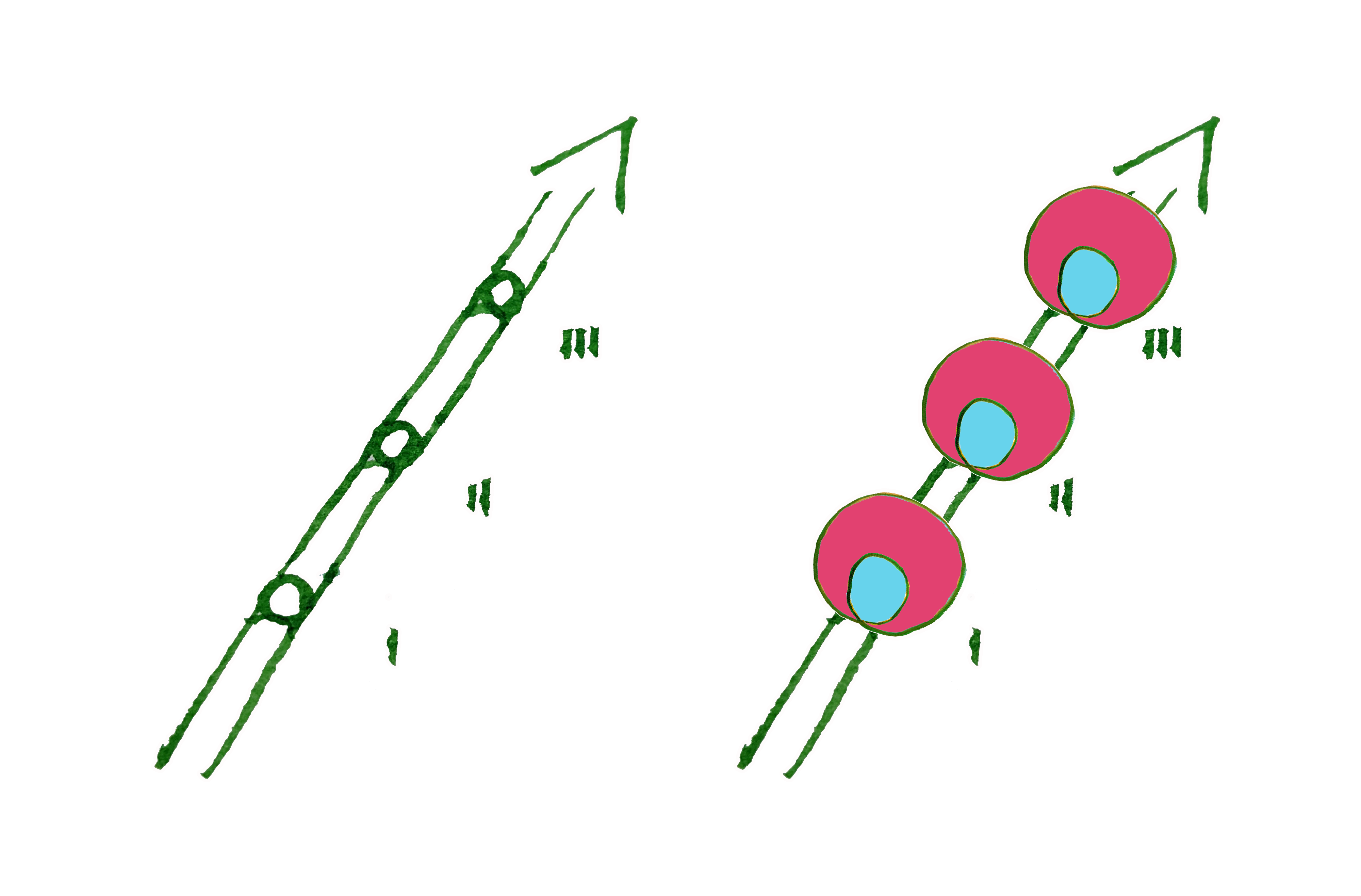
The same dynamic within a fruit, between the germinative seed and the nourishing flesh, can also be seen in animals. In my experience, my cows, with surprising regularity, lie down to chew their cud, with their faces toward the Sun. By contrast, I notice our sheep more often face away from the sun while grazing. What does this mean? I cannot entirely say. Perhaps someone else has seen things like this, but the Egyptian association of the head of the cow with the Sun isn’t simply a fanciful imagination. As there is a side of a tree where Saturn’s activity is more present in the ripening of fruits, and on which the tree’s rings and branches grow bigger, Saturn is also more active on one side than the other in an animal. You could almost say that the cow is facing the sun with its whole organism, with its backend in the shade. Steiner shows this diagrammatically:
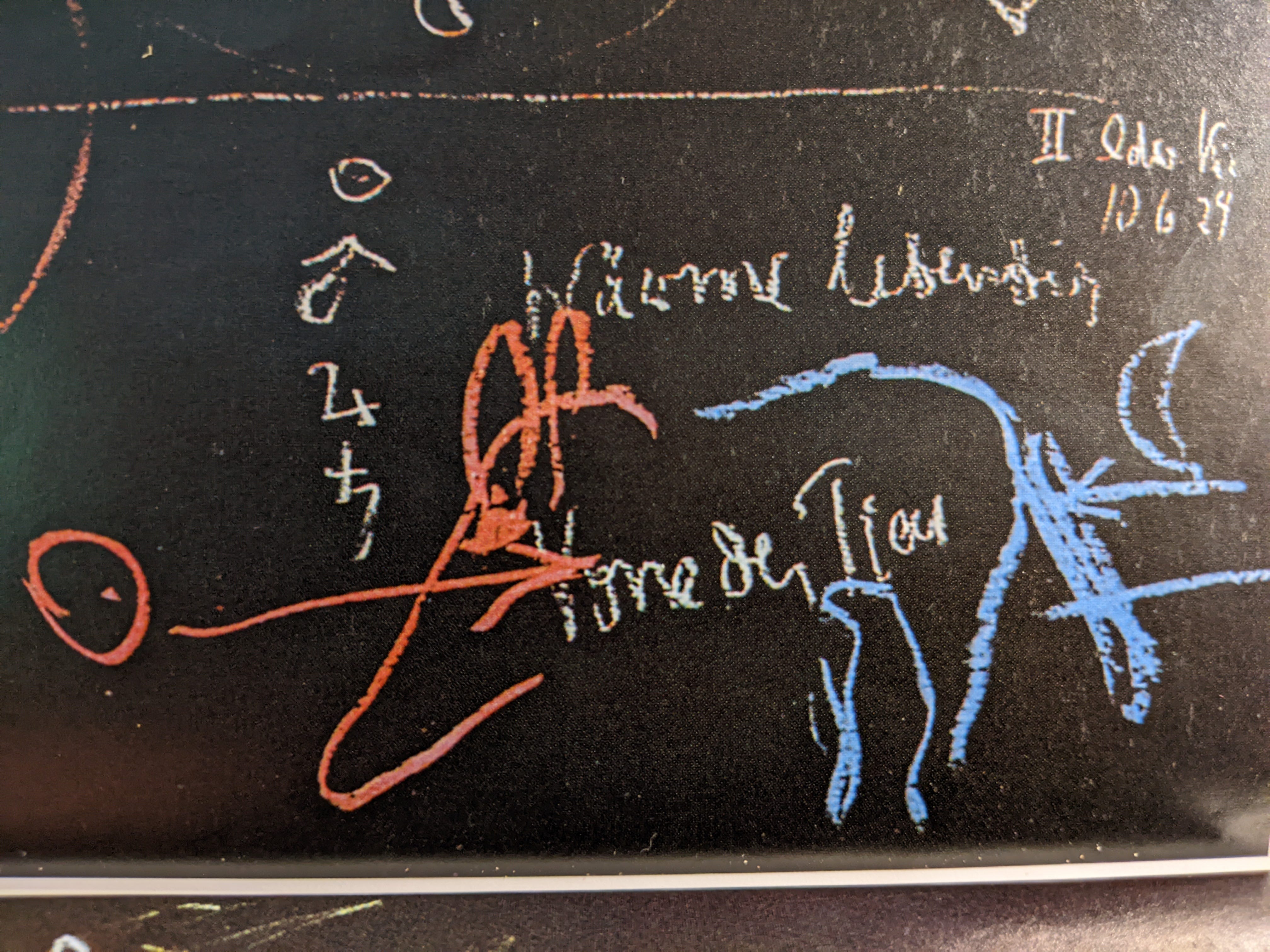
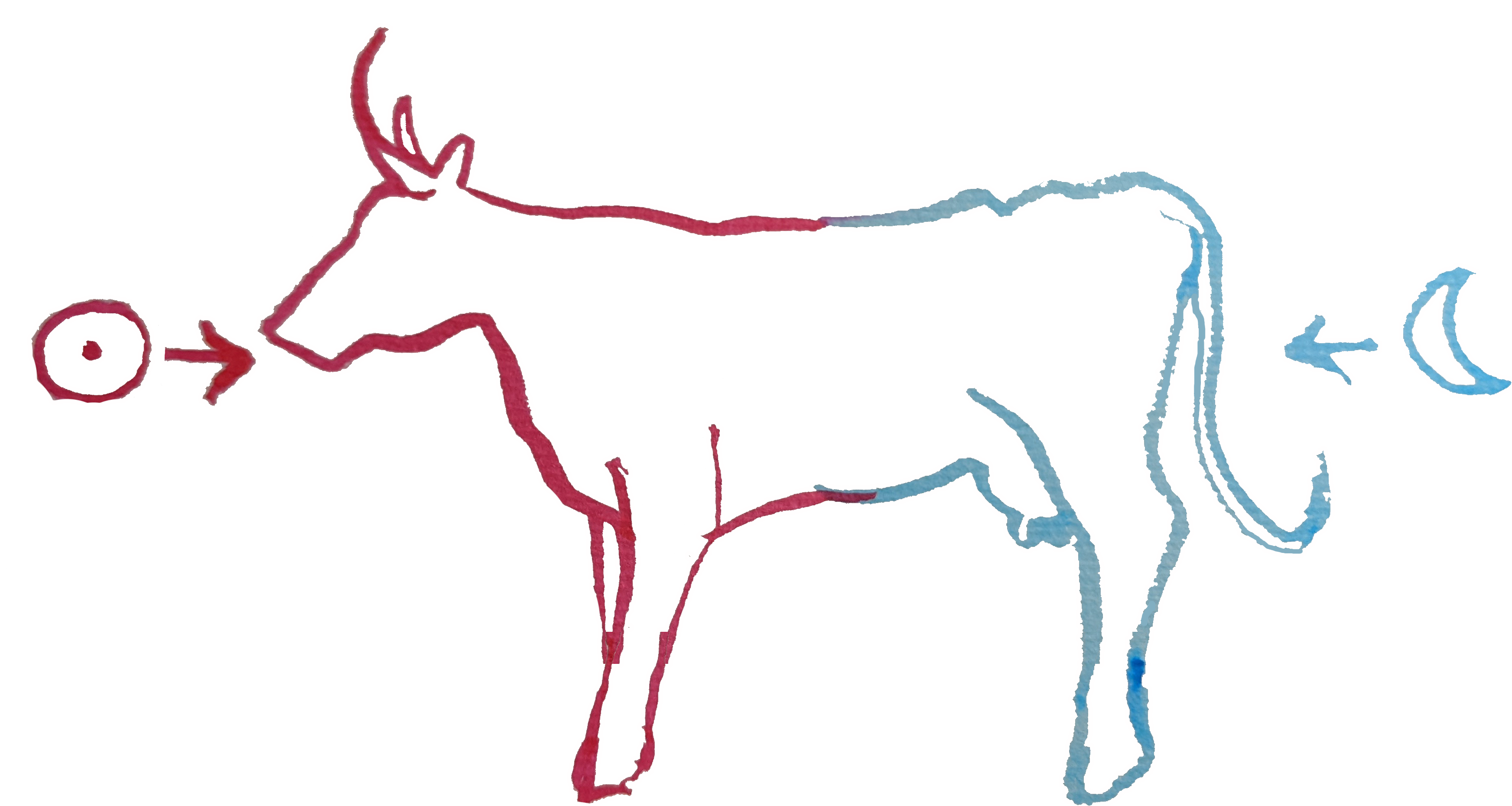
What would otherwise rise and feed the activities of the brain in a human being instead gets “deflected” back inward by the horns of a cow. Instead of fueling the brain and thinking, that same energy gets sent to the backend of the cow, towards the metabolic-limb (reproductive) pole.
In the human being, the mind serves a “lunar” function inasmuch as thought is always reflecting after felt experience. But in the cow, what might become thought is sent backwards before it can culminate in concepts. Concretely, the cow sends nutritive (“outer planetary”) forces to the back and middle of the cow, where, instead of thinking with the head, the cow ruminates on its food.
The ripening forces are sent backward to transform grass (which is hardly nutritive in and of itself) into something closer to ripened fruit rich with cosmic forces. “Men began to cook their food because they gradually discovered that what develops during fruit formation is mainly due to processes akin to cooking.”3 In the cow, an elaborate alchemy cooks grass into something closer to fruit, imbuing it with astrality and cosmic forces. When we baptize our experiences with feeling for a unifying cosmic idea and give them renewed meaning, we have “cooked” our sensory experiences into something that can provide fertility to the world. What we do in the realm of the head, one might say, a cow does in the realm of the gut. The manure that exits a cow contains some of what has been added through this “cooking” process, in particular, some of the forces that were deflected back from the head of the cow, which can nourish our plants in such a way that they support the human head. When we take manure from a lactating cow, we will notice that she has “calving rings” on her horns. What is happening here?
Not only is much of the astral forces deflected backward into digestion, but also ethericity is somewhat inhibited in the upper organism of the cow when she has been feeding a calf. Vitality is, instead, directed into the middle organism in the form of milk. “The Moon-force itself is still in milk, which is connected with the life-process.”4
In Laura Ingalls Wilder’s book Farmer Boy, Almanzo grows a prize pumpkin by taking a vine, severing it from the root, and placing it in a bucket of fresh milk. Almanzo switches out the milk daily, and grows a prize-winning enormous pumpkin. The method uses capillary action, and some may have experience with this.5 The point of this is that the “Moon” polarity, with its attendant inner planets, maintains the organism, brings about growth, and leads to reproduction. In a fruit, the “Moon” forces of the seed are usually surrounded by the “Saturn” forces of the sweet fruit. There are exceptions, like strawberries, where the seeds are on the outside, but that speaks to a very different process.
Though this could be said of other ruminants, there is a peculiar similarity between a cow and a bean. What would work on one polarity instead is deflected backward. A bean deposits nitrogen nodules in its roots as a ghost of a deflecting process that sends ripening forces not to a surrounding fruit but within the leaf and seed. The cow grows protein as horns and hoofs as it deflects back this same ripening power into its metabolic side.6 The bean produces a swollen fruit-like seed literally enclosed within a leafy sheath, a fruit within the leaf. The cow sends the ripening cosmic influences not to the brain but deflects them back to ripening processes within the back end of the rhythmic and metabolic-limb systems. “In the clover-substance, manifold elements of a fruit-like quality develop just like leaf and foliage.”7 In legumes in general, we see “pods” form: quite literally leaves enclosing around the fruit quality. In the milk cow, which produces an inordinate amount of this ripening power within the rhythmic system (something “fruitlike within the leaflike”), we should remember that “Milk is a transformed sexual gland secretion.”8 By contrast, a deer releases an inordinate amount of growth forces to the head pole as antlers that grow and regrow each year. As a cow’s age can generally be tracked by calving rings, the age of a stag can be correlated to the number of tips on his antlers, but as Dr. Karl Koenig notes, the tips of a buck’s antlers grow towards the orbit of the sun: upwards in summer and towards the horizon by wintertime.
During summer, the planetary powers become most clearly differentiated. In winter, they return to a kind of undifferentiated fertile chaos, without which the next season’s productivity is significantly inhibited. The use of the biodynamic preparations helps restore to the earth qualities that would naturally be depleted, because who thinks to add specific mammalian sheaths or medicinal quality natural herbs? By restoring all these together in the darkness of winter, we make sure that plants do not enter dead soil, which is to say, they do not enter soil deprived of the planetary forces.
Imagine an animal: it has a brain, kidneys, a liver, etc., but if you damage or remove a key organ, the organism cannot sustain itself. We seek, as much as possible, to work microcosmically, adding back to the soil things that correspond to these mostly forgotten planetary dynamics. None of this replaces sensible composting, cover cropping, or other sound agricultural practices, but biodynamics always enhances these practices. How can we say such things are inessential for thriving plant life merely because textbooks make no mention of them? I like to imagine the biodynamic preparations as providing the necessary resources for each stage of plant growth, which can be broken down in different ways, but one of the oldest forms of taxonomy is categorizing these dynamics as reflections of the cosmos back to itself.
What the farm organism is first and foremost is a microcosm of the cosmos, a living picture of the universe. By tending the small picture well, we all participate in repairing the whole.
Emerson, Selected Essays, Nature
R. Steiner, Agriculture Course, Lecture VI (GA327, 10 June 1924, Koberwitz)
R. Steiner, Agriculture Course, Lecture VIII (GA327, 16 June 1924, Koberwitz)
R. Steiner, Foundations of Esotericism, (GA93a, Berlin, 4th November 1905)
“Yes but it's a little more complicated than just feeding the pumpkin plant milk What you need to do is have a healthy pumpkin vine and trim away everything except for one fruit and the vine it's attached to. Let the pumpkin recover for a few days. The take a glass jar with a lid and some cotton candle wicking. Punch a hole in the lid and pull some of the wick through the top of the jar. In the jar mix up some powdered milk at half strength. Fill the jar, screw the lid on. Now the tricky part. Make a slice in the pumpkin vine right where it comes out of the ground. Make the slice about an inch long and about 2/3 the way through the stem. Take the end of the wick in the jar and carefully put it in the slice you made in the stem. Be careful not to pull apart or damage the stem. After you have the wick inside the stem tape the opening in the stalk closed. Then tip the jar upside down and let the milk solution run into the stem. Keep watering the plant as usual and never let the milk run dry. Your pumpkin will grow 3 or 4 times the normal size. It will be lighter in color than a pumpkin grown the regular way.” Source: http://tomatoville.com/showthread.php?t=25030
In “lower” organisms, the middle rhymthic system is not so clearly differentiated, so we’re really dealing with a clearly defined head and metabolic-limb pole, while the middle rhythmic system is more vaguely articulated. It is still present, but not clearly separated out as its own functioning system as clearly as it is in, say, carnivores.
R. Steiner, Agriculture Course, Lecture VIII (GA327, 16 June, 1924, Koberwitz)
R. Steiner, Agriculture Course, Lecture VIII (GA327, 16 June, 1924, Koberwitz)
very helpful!
Beautifully explained. Today when I walk by the cow I will pay more attention to which way he is facing!