



With your friends Lloyd Nelson and Stewart Lundy
This week we explore some aesthetic qualities of the first Biodynamic preparation, BD #500
TWENTY-EIGHTH WEEK OF THE YEAR
28. Ich kann im Innern neu belebt
Erfühlen eignen Wesens Weiten
Und krafterfüllt Gedankenstrahlen
Aus Seelensonnenmacht
Den Lebensrätseln lösend spenden,
Erfüllung manchem Wunsche leihen,
Dem Hoffnung schon die Schwingen lähmte.∇∆
I FEEL rekindled from within
the inner Sun of self-experience,
whose rays go forth as tides of thought—
whose billows flood the soul in light,
where she both catches and is also caught,
to yearnings long forgotten granting flight
whose wings my idle hope had crippled
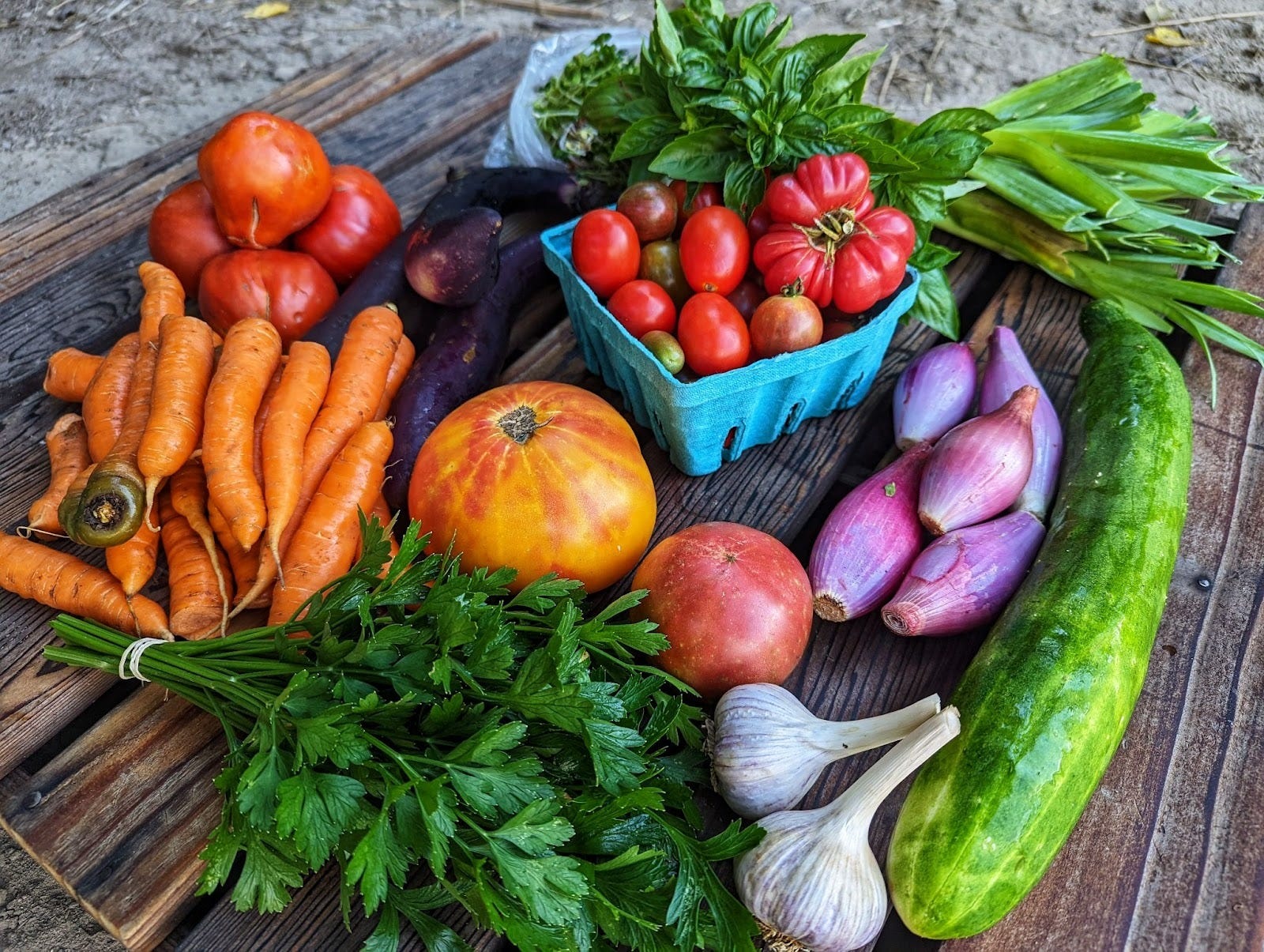
You know when you see a beautiful fruit. There’s nothing superfluous to it, everything is in its right place just by it being itself. It’s a beauty with substance, not just empty appearances. An artificially ripened tomato may be red, but it is also a lie: it doesn’t taste like a ripe tomato and doesn’t have the vitality or nutrition of a real tomato. Real beauty isn’t mere seemliness, which is so often contrived and hollow.
Rudolf Steiner created Biodynamic agriculture to improve nutrition and the health and overall wellbeing of everything involved in agricultural production. Real food contains real nutrition. We can use the Biodynamic preparations to boost nutrition. What follows is a real example.
Astro Opportunities
When opportunity knocks, take advantage, if you can.
An excellent opportunity to use your Biodynamic preparations is on October 28 & 29. A positive boost from a series of beneficial astronomical trines starts in the early hours of October 28th and continues on 29th.
On October 28th Mars will Trine Jupiter.
Then on the 29th Mercury trines Neptune followed by Mars Trine Saturn.
All these trines are happening while the moon is in front of the ambitious, hard-working Earth/ Root constellation Capricorn.
These trines are tremendous opportunities to work with beneficial planetary energies at a superior time. We can recommend a spraying of Biodynamic Horn manure and barrel compound at these time for seeing positive results in your garden.
Astonishing Appearances
Steiner reminds us, “Modern methods of improving compost may give astonishing outward results, but ultimately they turn all the first-rate agricultural products into mere stomach-fillers. They will no longer have real nutritive power for human beings. It is important not to be deceived by things that look big and swollen; what is important is that their appearance be consistent with real nutritive power.”
Flaws of Perfection
It’s not that everything has to be “perfect” at all. In fact, in Muslim art, with all those beautiful geometrical patterns, flaws are often deliberately added, as a conscious acknowledgement that none of us is perfect. But we’re not looking for artificial perfection, but rather the emergent beauty of transient forms. Does a tomato conform well to its spiritual archetype? It is always an approximation, but we recognize beauty when the form closely matches its spiritual constellation with minimal distortion. This is why fake tomatoes are compelling: they have the external form – but only that. We are looking not only for external seemliness, but deep beauty. It is better to have nutritious but lightly flawed produce than to have pretty plastic food devoid of vitality.
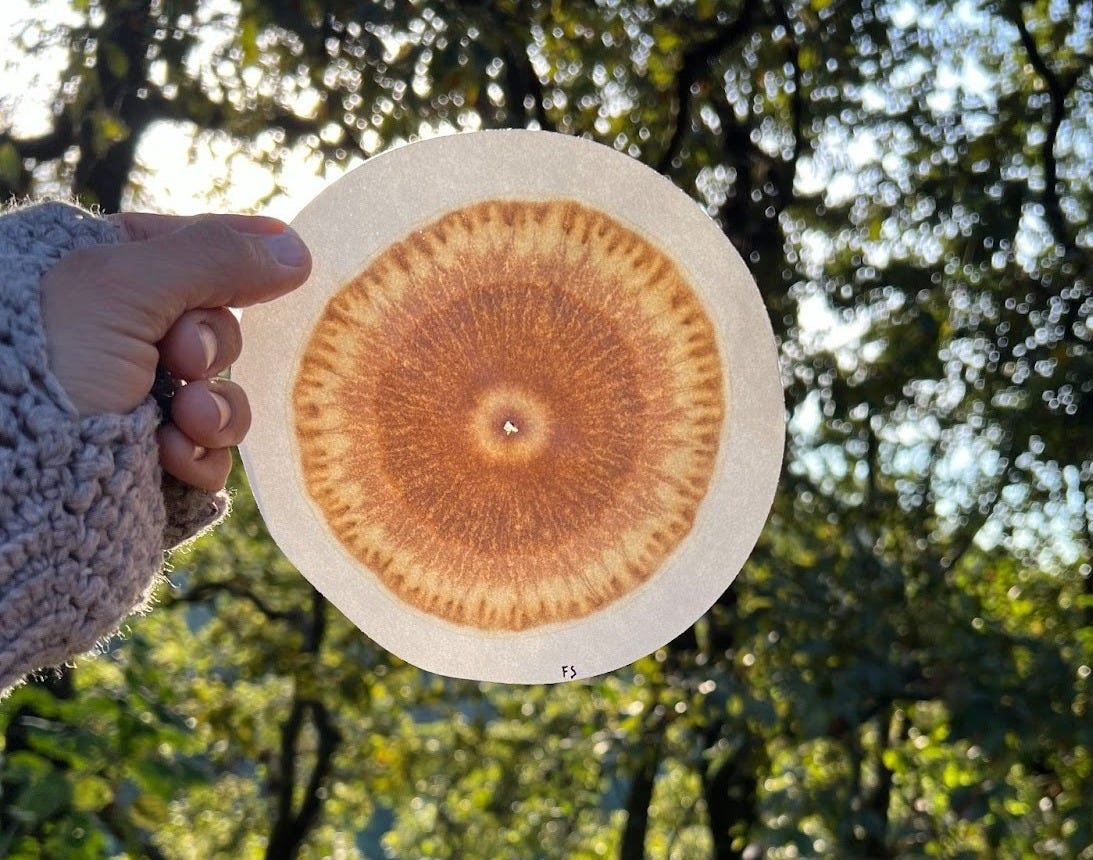
By the same token, we recognize quality in chromatography by whether or not the image is beautiful. Sure, there’s an element of subjectivity to an aesthetic approach, but the observer is impossible to eliminate from phenomenology. There is no universe to observe or study without consciousness. While people may have their own prejudices or analytical approaches, it’s easy at a glance to see something beautiful. We can criticize a painting or look closely at the brushstrokes of the artist and research what pigments she used, but those steps away from aesthetics and into ratiocination, and criticism always distances us from the phenomenon itself.
Feeding soil and soul
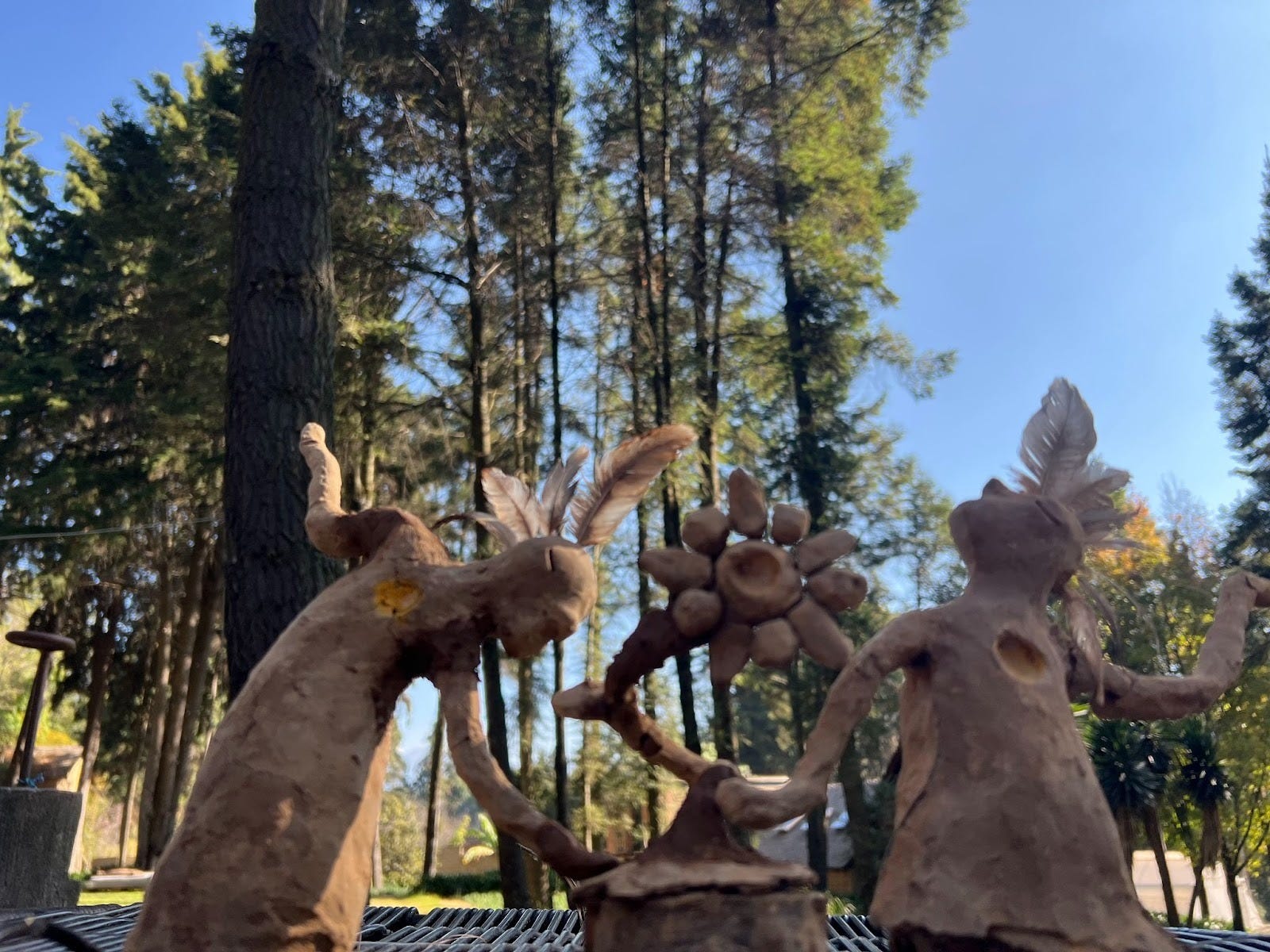
As JPI president Teresa O’Shaughnessy says, “Biodynamics is an art form that feeds the Earth and our souls.” It is not enough merely to have food that looks good or even that tastes good, but food that stimulates an inner soul mood of wholeness. This is where all the best arguments for (or against) biodynamics fall apart: at the threshold of food itself. Taste and see! The easiest way to bypass skepticism is to feed someone wholesome food.
“The beautiful is a manifestation of secret laws of nature, which would have remained eternally hidden from us without its appearance”1 or as Plato put it, beauty is the splendor of the true.
“Strive for health, beauty, and permanence and everything else will fall into place,” said E.F. Schumacher, who endorsed Alan Chadwick’s wonderful work. Chadwick had said, “We need to create the beauty and the quality first. The quantity will follow.” Alan imparted ideals of aesthetic beauty, robust health, and long term fertility in the gardens he planted and in ideals he shared with apprentices. Many of the most successful and beautiful and productive biodynamic gardens, farms, and vineyards operating in the US today were created by those inspired and educated by Alan’s work.
What qualities can we impart to our Biodynamic preparations through imbuing them with the good, the beautiful, and the true?
Just as Waldorf classrooms are filled with carefully selected colors, textures, and geometry, so should our Biodynamic preparation making and storage be selected consciously and tended in ways that maximize their vitality.
Finding beauty in Manure!?
“No matter how ugly a thing may be, there is always some beauty concealed in it,” Steiner reminds us. Even common waste products can be transformed into something good and beautiful. Just think about common cow manure. Oh how does a Biodynamic practitioner go through such a tremendous effort to ennoble such a common waste product.
A Sufi story told about Jesus communicates the need to seek out the beauty even in what seems unclean and ugly: “[Jesus] one day, accompanied by His apostles, passed by the corpse of a dead animal. One of them said: ‘How putrid has this animal become!’ The other exclaimed: ‘How it is deformed!’ A third cried out: ‘What a stench! How cadaverous looking!’ but His Holiness Christ said: “Look at its teeth! how white they are!”2
The foundational preparation in Biodynamic agriculture is cow horn manure, code-named BD #500. This soil remedy improves and works on and with the life of the soil. With regular use of BD Horn Manure you can expect to see an increase in soil life, structure, and improvements in overall soil health. With the upcoming astrological alignments, you can take advantage of the powerful trines and use your horn manure.
Everything matters
When we make Biodynamic preparations, attention to detail can impart qualities. Does it matter how the horns are placed in a pit? Everything matters! This doesn’t mean we need to become obsessive, but we should do what is reasonable within our sphere to make things beautiful. Yet we cannot take everything into consideration or we would never do anything at all! We should take enough into consideration that what we are doing is integrated deliberately with the environment, the regional climate, and with a specific image of some preexisting pattern out in the cosmos – and to do so with an artistic eye.
After all, it is easier to work in a beautiful space. It takes less effort to be in a harmonious space. So plant flowers first, and then think about useful crops. Plant things for the elemental world, for habitats for pollinators, birds, and elemental beings, and then consider oneself. Make an ecological paradise first, and then whatever you choose to grow in that beautiful space will do much, much better.
Choose Beauty
While Stewart was in Mexico, the same theme arose. The women participating proposed putting extra care into laying out the horns in a special pattern. They asked Stewart, who said, “Whenever there’s a question, choose the more beautiful way!”
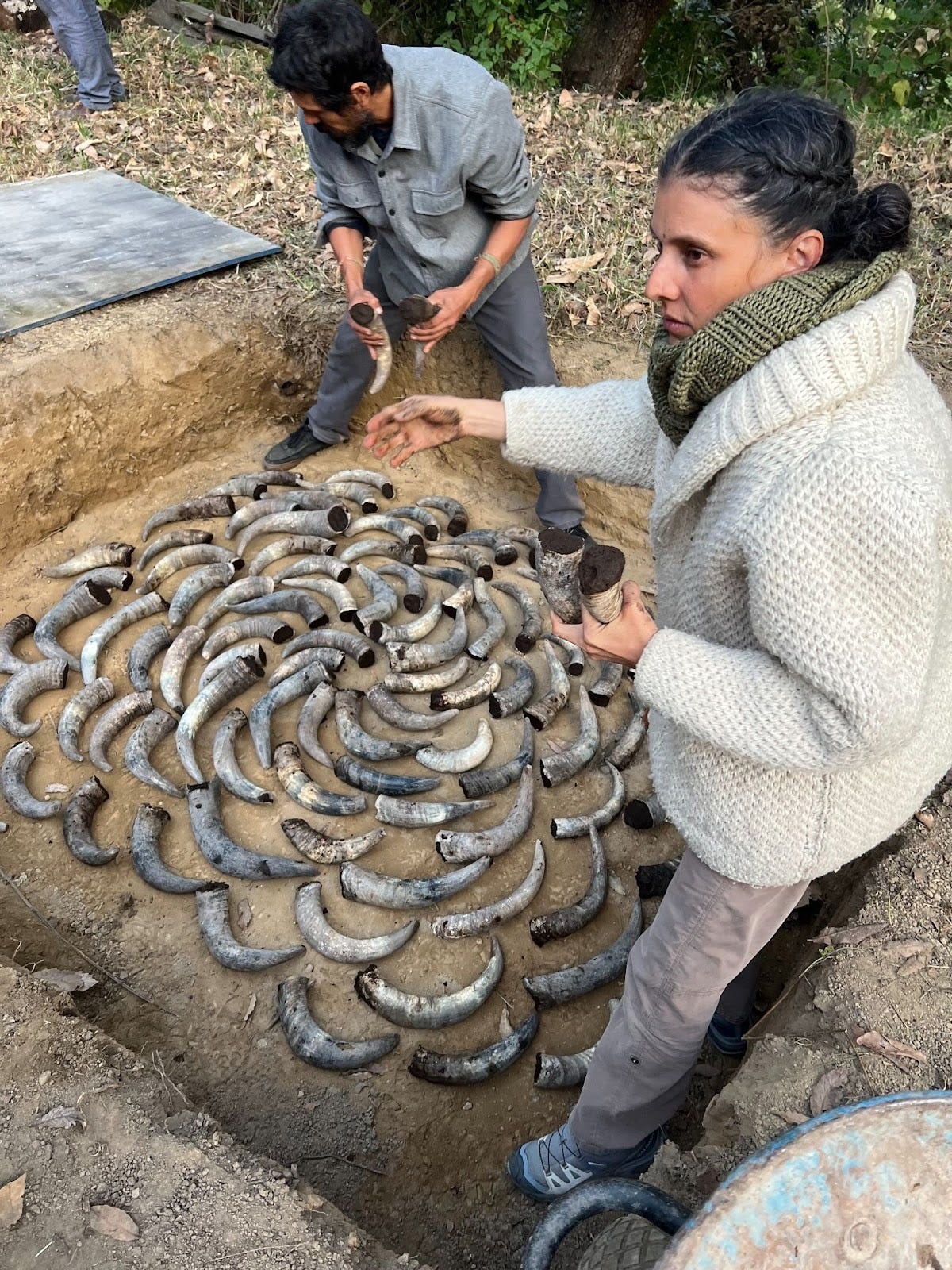
The art of Biodynamics
One of the secret teachings of the master BD prep maker Hugh Courtney was “aesthetics in preparation making.” That is, he would teach us to do things sometimes the hard way. But he would always tell us, “There is a method to my madness.”
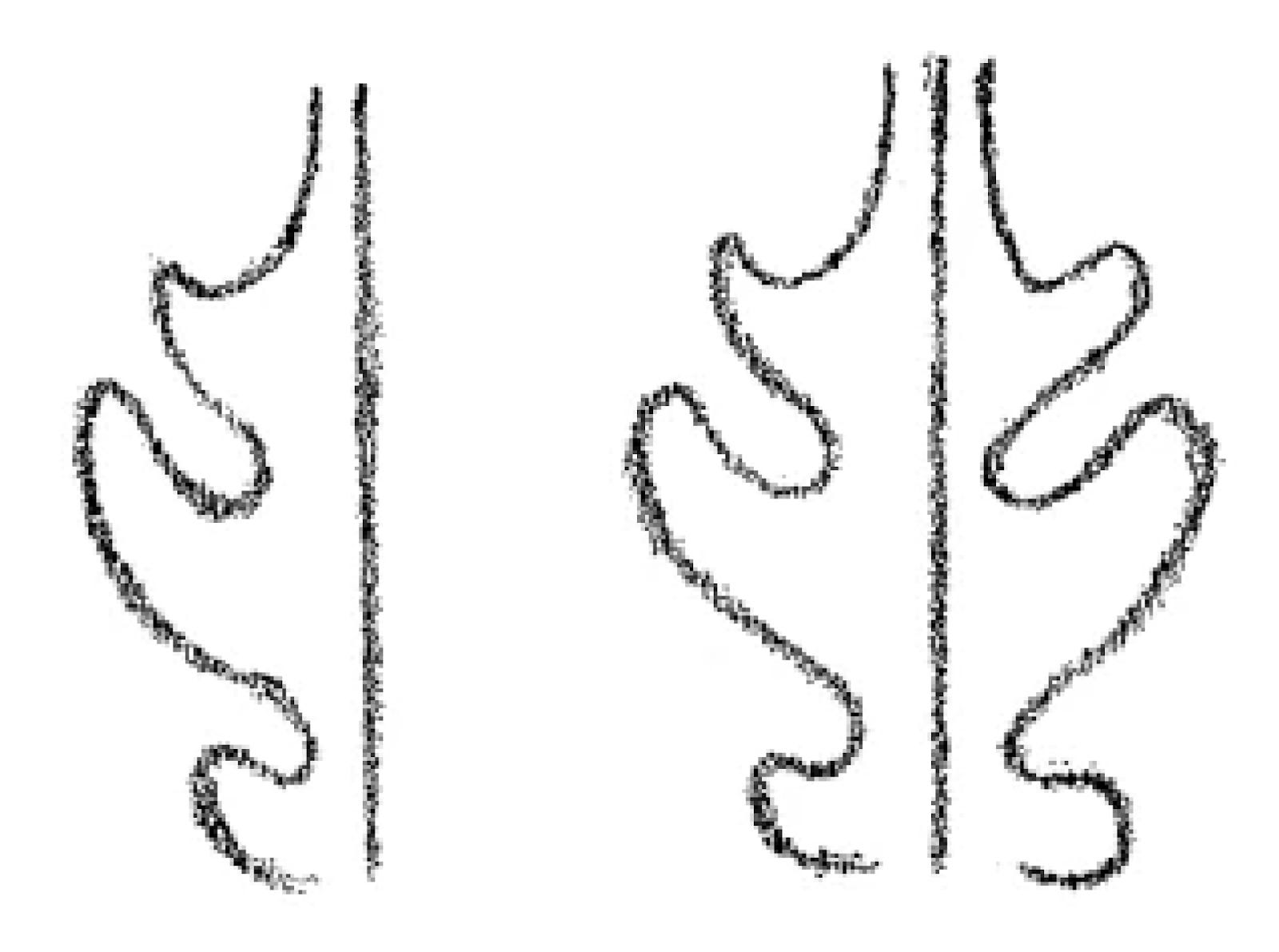
“One could draw a pattern such as this (see diagram). Teachers must be able to evoke a feeling in children that such a pattern is intolerable because it does not represent reality, and a little practice with students who react in healthy ways will soon enable you to do so. Teachers should intensify this healthy feeling—not through suggestions, but by drawing it out of the students.”3
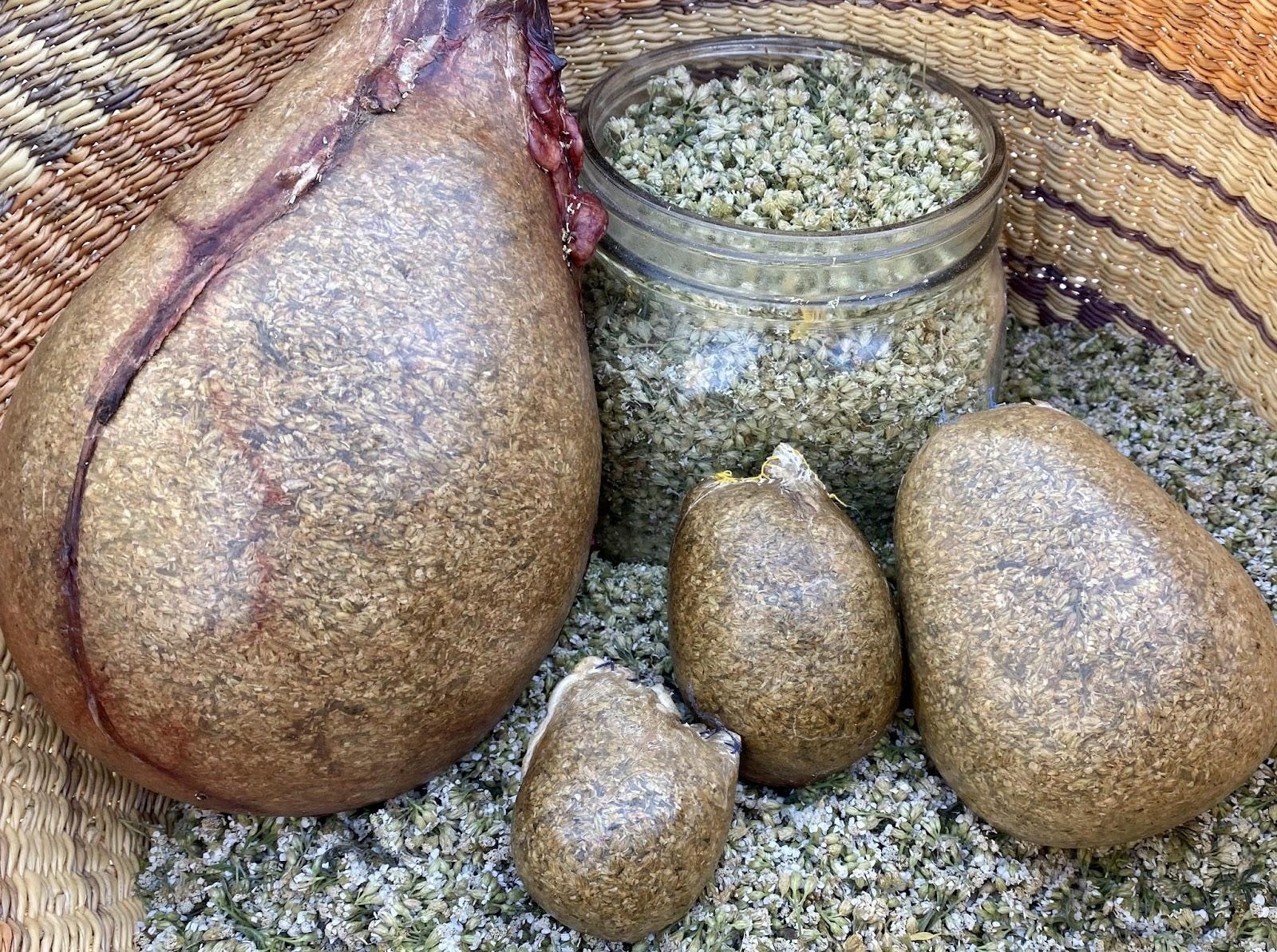
Hugh Courtney invested an unusual degree of attention and care into making the preparations. We can consider how he carefully selected the proper piece of mesentery and carefully sewed the mesentery into dandelion pillows. An amazing amount of attention was given to the proper clipping of the yarrow flowers and the inflation of the stag’s bladder. Hugh reminded us, with the right attitude, we can impart powerful healing qualities in the creation of dynamic remedies through hands-on physical work. What is important here is “will forces,” which is the investment of concentrated focus and effort together with a specific intention. “All such mysterious power comes always from concentration.”4
It is through willful effort that something transfers from the human being into the task at hand, as with any craft. As words fully intoned and felt can imbue an object with a blessing or a curse, our hands, working towards benefitting the world, are guided by one who holds the highest principle. This is why mixed groups can produce good preparations; it is not because everyone is equally good at making preparations, nor that everyone’s attention is steady, but rather because there is always someone at each gathering who acts as a priest holding the highest intention with steadfastness, even in the midst of groups with mixed motives.
We employ “this devotion [...] in a collective way. That is, where many individuals, under the direction of one, are decided to practice [concentration] according to the mind of that one.”5
The activity of a lay priesthood of the earth, whose affinity for living spiritual ideals ennobles the work of the group, “have a favourable influence by their mere presence and not by anything they say.”6 So Hugh, often more actively in his silence than getting involved in combating errors or disagreeable people at workshops, funneled inferior intentions upwards to something greater. What attracts people to biodynamics is not always good, beautiful, or true, but as with many esoteric things, a desire for spiritual bypassing: skipping exoteric practical knowledge of farming to gain secret powers. But such egotistical bypassing only ruins the individuals who seek premature wisdom. As Steiner warns us, “A Spiritual Science without love would be a danger for humanity.”7 You should never trust a doctor who cannot fix a chair, because a living organism is infinitely more complex. And you should never trust a biodynamicist who cannot keep plants alive, because the world of subtle forces is far more slippery than getting results in the garden. Some people have a “green thumb” and seem to gift vitality to everything they tend, while others – energy vampires – steal vitality from everything they interact with. To create beauty requires giving from your own reserves, a bit extra time, a little more attention, more energy sacrificed for something more than merely utilitarian purposes.

We can lend attention to practical details for simple yet effective improvements in Biodynamics. Let us take a practical relevant example, since this is the season to make BD preparations.
Hugh would remind us that attention to detail that goes into the making of preps, the pit design, the way they are buried, the astronomical timing, these are all important factors to consider.
Does it matter how these things are done?
Making BD #500
Take, for instance, the practical considerations that go into the production of the preparation BD #500- Biodynamic Horn Manure. Does it make a difference where and how the burial site is made? What is the shape, round or square? How is the location? Is it far enough from trees of other potential interferences? How does the rain or snow melt drain from the area? How is the atmospheric drainage? We can question the energetics of a site! Was the energy right? If you dowsed, were there beneficial or detrimental energies? What did the dowsing rods reveal?
So many amazing questions to ponder when locating a site to make the preparations. Every detail matters in Biodynamics. We can choose to be aware of such considerations or not. If we want to improve our practices we can pay attention to the details.
Let us take a practical example: creating a harmonious resonance effect through placement of the cow horns when making BD #500. We will attempt here to provide a living example of incorporating potential improvements, such as sacred geometry, numerology, geomancy, beauty, and resonance into the production process of the BD preparations.
The dedication to quality craftsmanship when it comes to the production process is a huge key to making biodynamics successful.
A living example:
How can spiritual scientific imaginations penetrate the depths of our biodynamic strivings? We can impart qualities of soul-filled imaginative and inspirational forces into the preparations through our creation of them. When making Biodynamic Horn Manure preparation, Steiner tells us “we must infuse the manure with living forces”. Practices such as sacred geometry, numerology, and astrology can be incorporated into the preparation making process to enhance healing qualities.
An example of making BD #500 Horn Manure follows:
The cow horn pit can be done rather carelessly where horns are tossed in a burial pit, OR each horn can be placed, tuned to the spot, slightly shifted so excess water can drain out etc..
The art of numerology can be a helpful addition here:
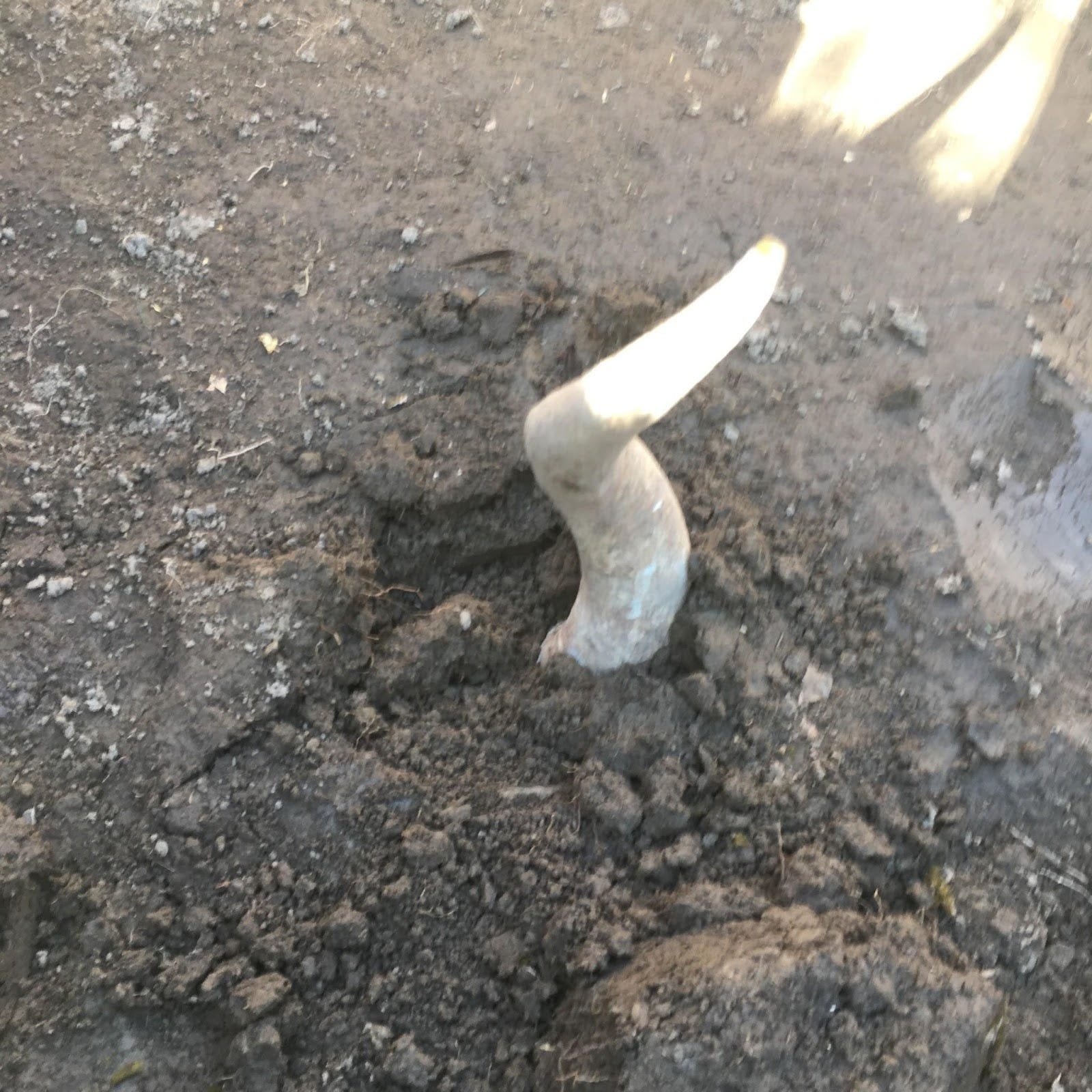
As seen in the following picture, we start with the one horn in the middle. In imaginative consciousness the one can represent perfect union, or perhaps the mother earth, or singularity, where we all are one.
Next we can surround the one with twelve more. We can use Steiner’s ideas of imagination, intuition, and inspiration here to add healing qualities. For instance, an artistic expression can be imagined with the twelve horns representing the twelve constellations of the zodiac, or the twelve biblical apostles etc.
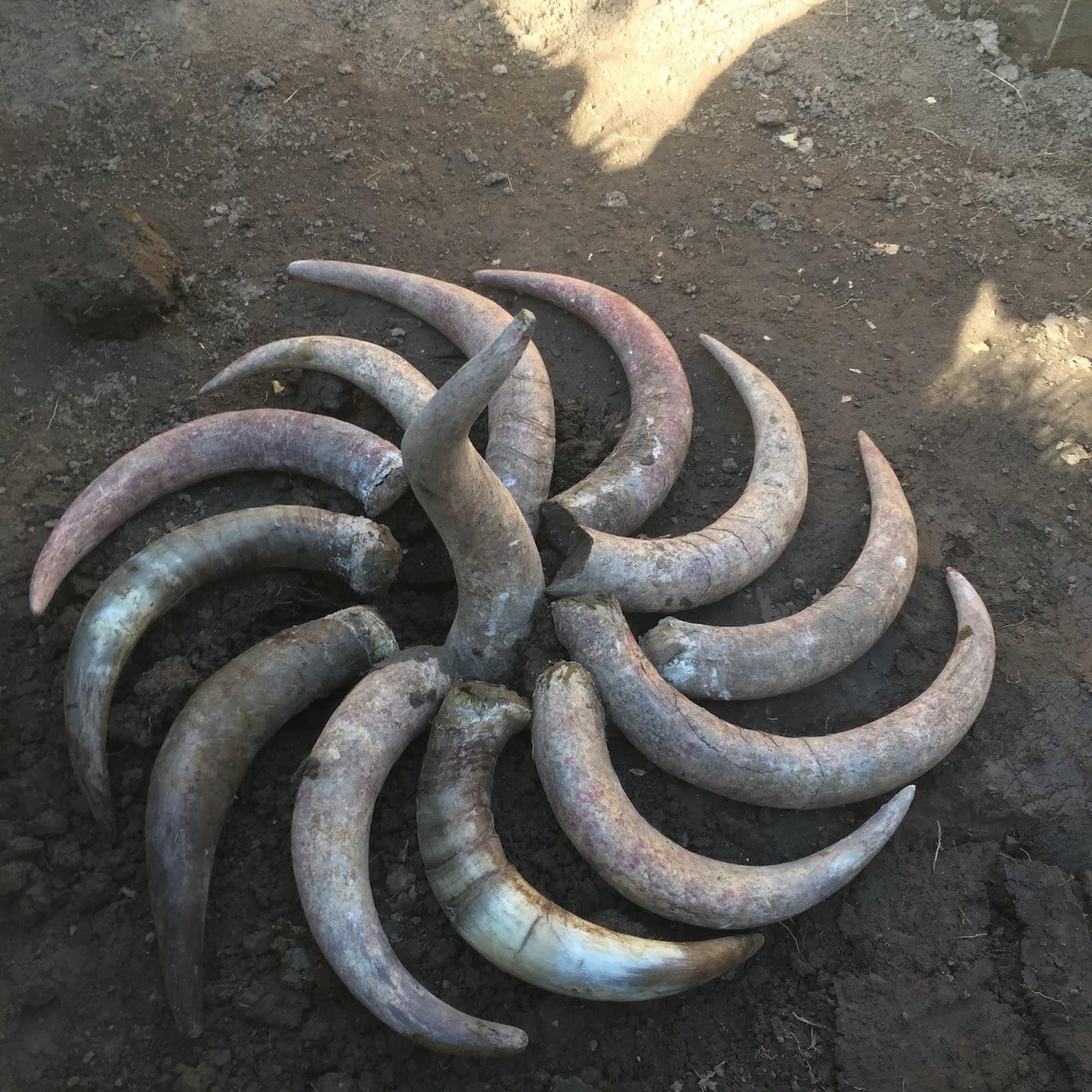
We now have the twelve surrounding the one! Where have you seen this pattern before? Use your imagination if you can. Freedom from limitation can provide wonderful opportunities for exploration of the physical and spiritual world.
Next, we continue to build resonance towards the center of the spiral with the addition of more cow horns.

Utilitarian artistry
There is an art to biodynamics. The Biodynamic preparations can be made utilitarian, or can be artistic, and hopefully a little of both! With the above picture, one can almost experience the energetic improvement of the spiraling action of the placement of the horns.
Questions arise as to ways to improve our work. As we continue the production of the BD #500, we can continue to attempt to create harmony and resonance within the hornpit.
Next step, add more Earth, and see a new type of spiritual flower appear, a cosmic communication device, a tuned up new type of Horn Manure!
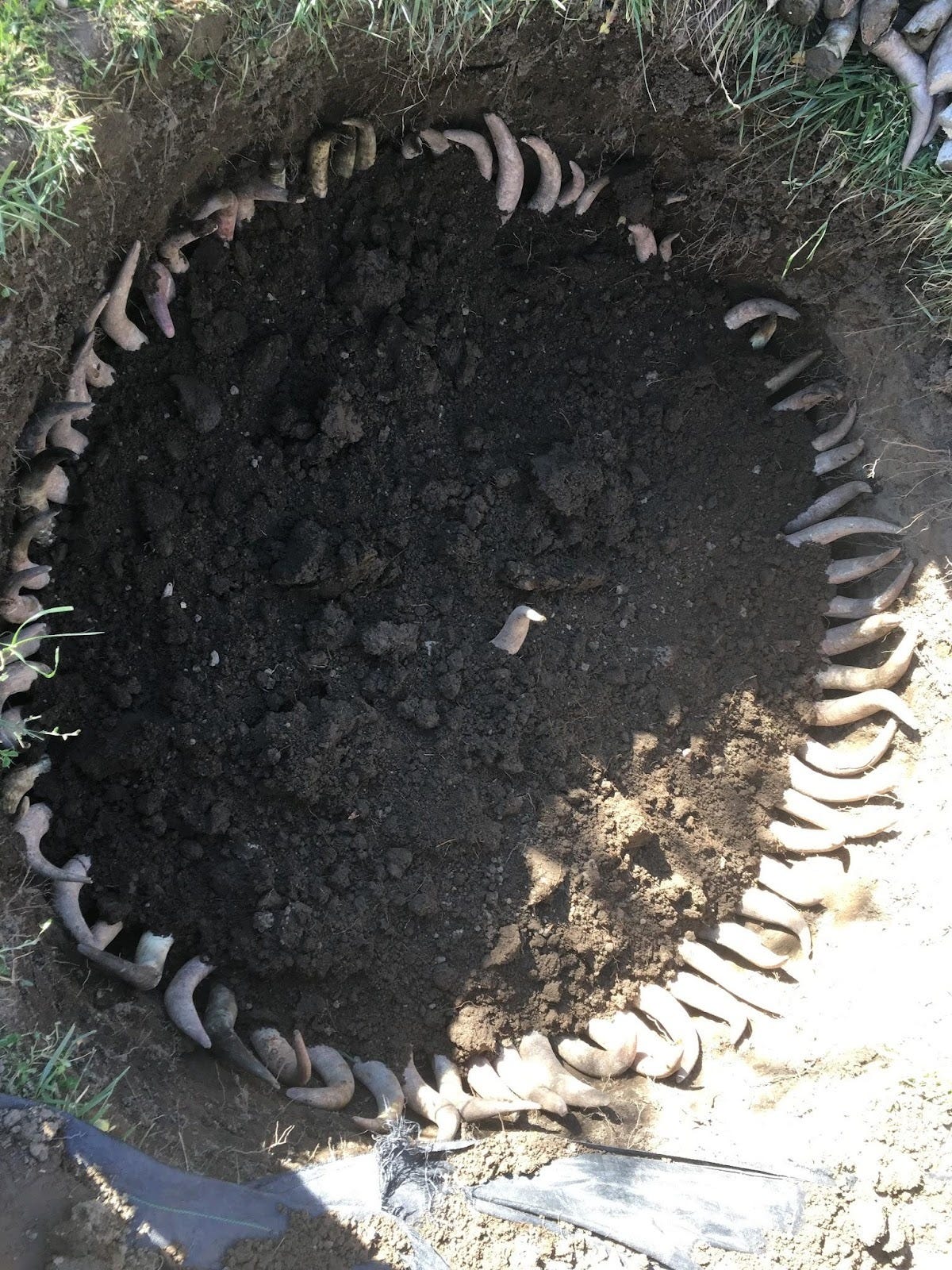
Adding numerology
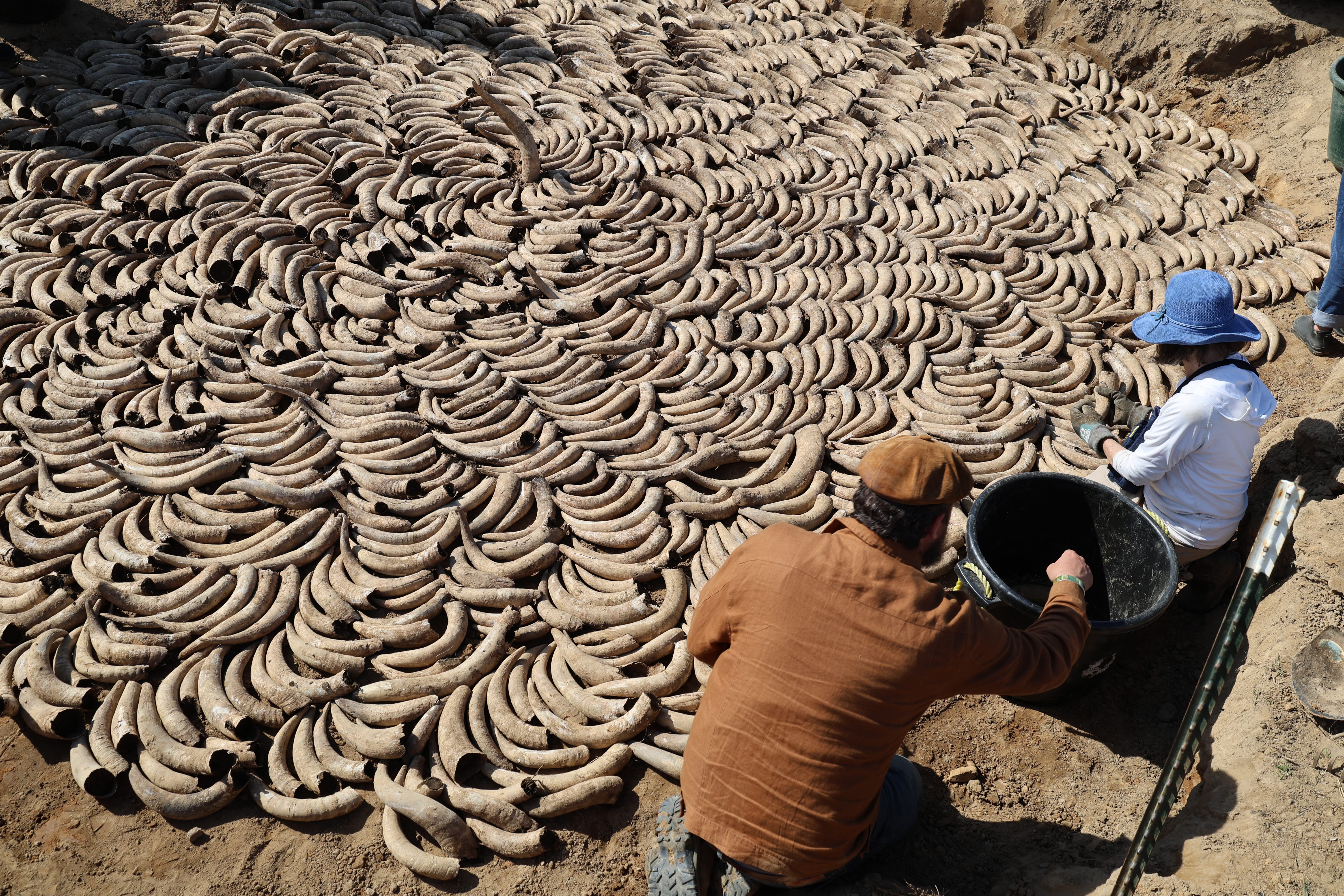
Interestingly, the Horn pit has developed over the years. This year, the largest horn pit made in Colorado has five layers of horns, each layer carefully placed on top of the previous one. The foundation layer on the bottom has 144 cow horns placed carefully in a spiral. Why 144? Well, practically speaking, that is what fit perfectly into the hole we previously dug! Also we can look towards the numerology of it all.
12 times 12 is 144. Twelve squared is 144. In numerology the number 144 symbolizes manifestation, divine guidance and spiritual awakening. The divine order is seen in the Fibonacci sequence, and 144 is the twelfth number in the sequence. These insights into numerology can lead towards ways to improve the overall effectiveness of the Biodynamic work.
It was interesting to hear some folks in Wisconsin just last week finished making there BD #500 horn manure. When asked how many horns were on the bottom layer the answer was 145. The addition of one more adds a nice start to a new beginning…
The artist René Magritte believed that form should follow function, and that an old barn that has been repaired by different people – and with different skill levels and different materials – is beautiful in an organic way. And that’s the thing in nature, form and function are never divorced, but united in a living way. Plants and animals appear certain ways and those ways also function in specific ways. We don’t need to add filigree to our buildings for an old farmhouse to be beautiful, but it should be functional and coherent, with nothing out of place.
In the evolutionary art of Biodynamics, we strive to add art and love to agriculture. The authors of this article ended up publishing this thirteenth edition of the Biodynamic digest one day behind schedule. We have been super busy making the Biodynamic preparations, and lots of them! Stewart shared the following picture with me of a magnificent horn pit he is working on. I had to share with you as this is a gorgeous site, one of the most beautifully large and well proportioned horn pits in recent history! Good work!
Go Biodynamic- For Life!
Goethe, Maximum und Reflexionen
Baha’ud-Din Muhammad al-’Amili’s “al-Mikhlat” (Beirut, 1985), p. 579.
Anonymous lecture notes from the estate of Emilio Lanzi, student of Manly P Hall, transcribed by Stewart Lundy.
Ibid.
 | A guest post by
|
 | A guest post by
|
Putting the Culture back into Agriculture!
xox
It was an honor to be with Wali as he spoke eloquently about our role in creating sanctuaries before we buried the preparations. Priesthood was felt!